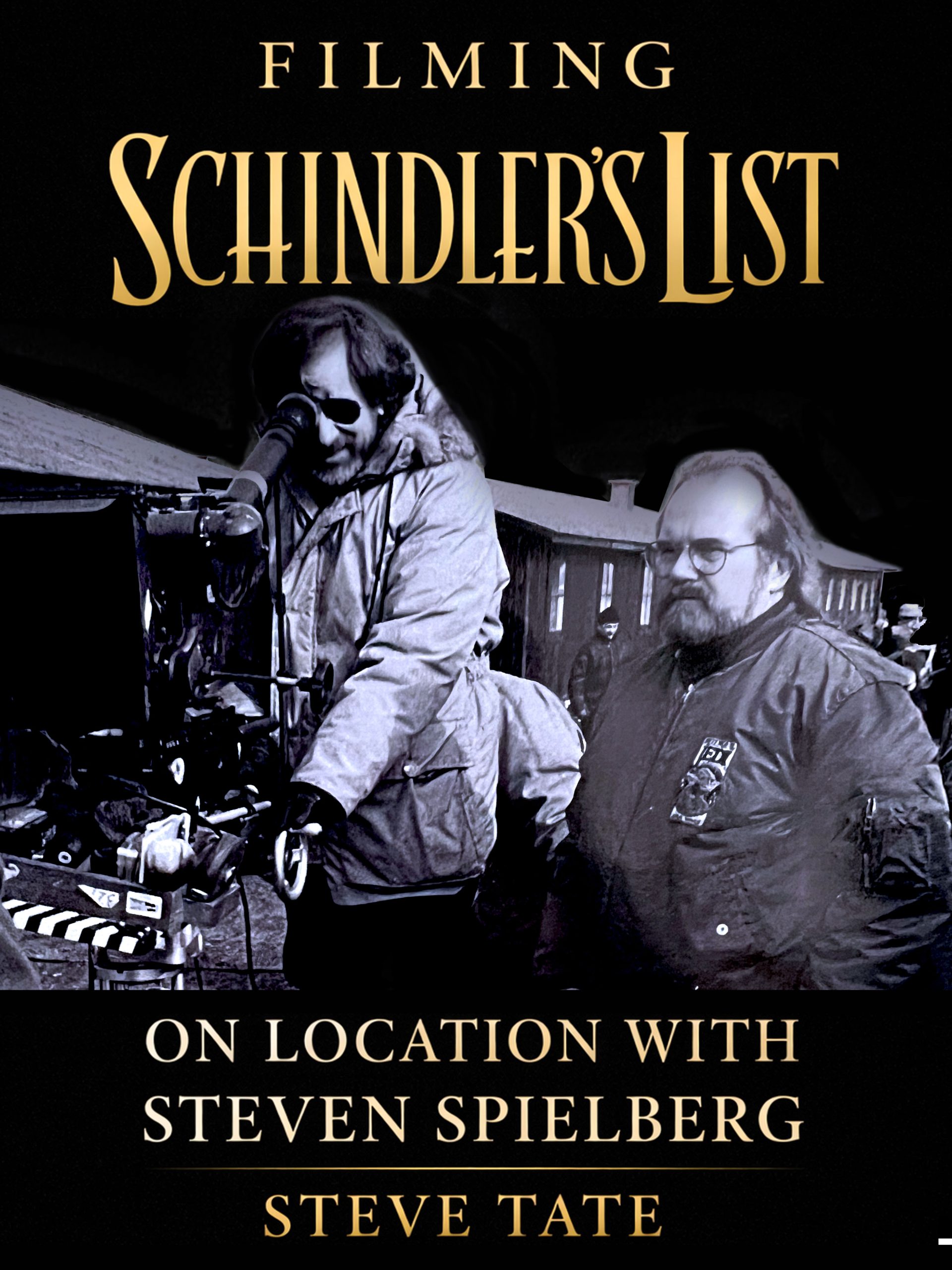
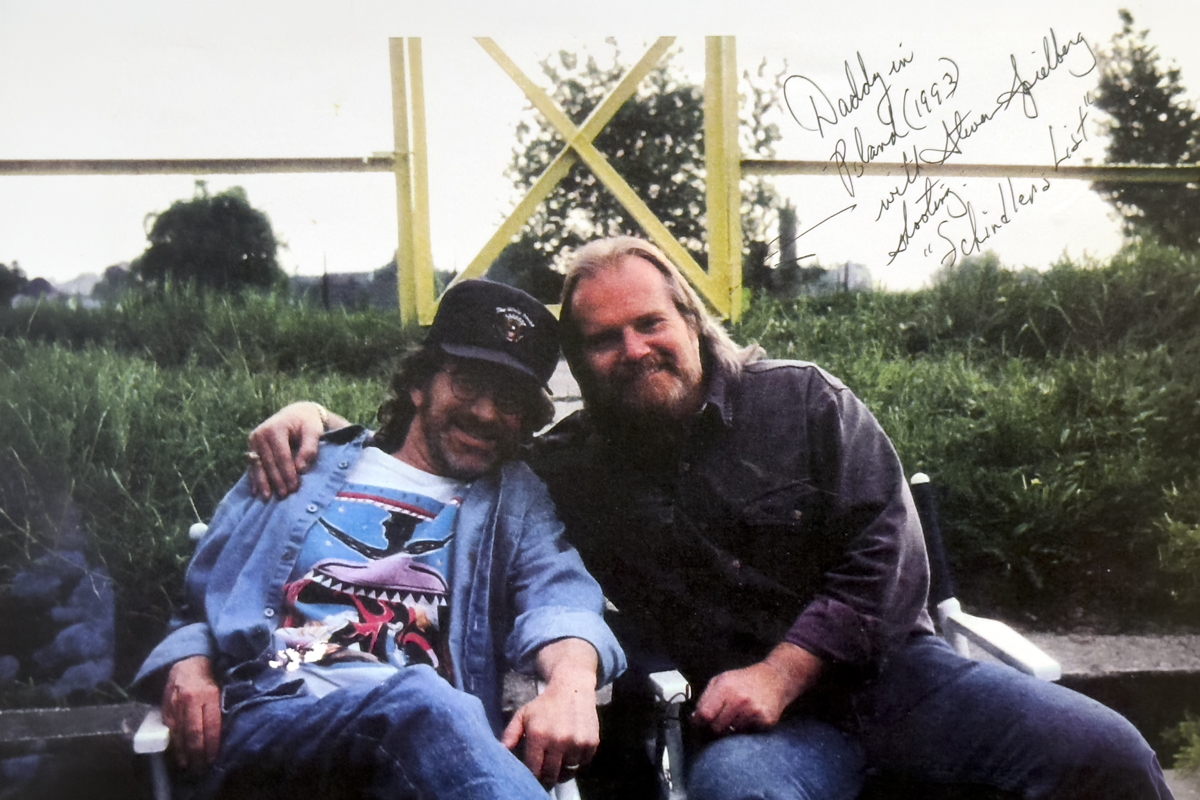
The premise. Steve Tate was Key Assistant Camera — the focus puller — on Schindler’s List in 1993. Spielberg operated the main camera himself for much of the production, which put Tate physically beside him for most of the shoot: 72 shooting days across Germany, Poland, and Israel, over roughly four months. The book is his first-hand account of that, assembled from his own notes and recollections. He didn’t live to finish it. His son Jason brought the material to you, and you organized it, filled the gaps, and illustrated it while keeping his voice intact.
The arc. It’s chronological and it’s a journey story. It opens with him already changed — on a plane out of Frankfurt, trying to reconcile the modern view of Germany with what he’d just spent four months inside. Then it doubles back and runs the production in order:
Getting in — the hire, meeting producers Branko Lustig and Jerry Molen, the pressure of taking a focus-pulling job of that magnitude.
Prep and Poland — arriving in Berlin and Kraków, the first visit to Auschwitz, standing on Płaszów ground. A recurring observation runs through this stretch: Poland in 1993 still looked decades behind the West, and that made the 1940s recreation feel disturbingly close rather than staged.
The shoot — Liban Quarry, Bonarka, Birkenau, Monowitz, Kazimierz, and interiors in the actual Schindler apartment. Filming the girl in the red coat. Goeth’s Luger jamming. Cold so severe it became a camera-department problem. A Passover observed mid-production. Meeting Mietek Pemper. The set-security and access pressures.
Spielberg up close — this is the thread that will sell the book. Not the public figure but the working one: a director carrying visible weight, and also a father whose kids showed up on set in Soviet caps. Your Mirror Moment chapter — Tate buying a Soviet general’s parade cap in East Berlin in February and deliberately holding it for months waiting for the right day to give it — is the best single scene in the book.
The end — the final shoot, farewell to Poland, then Jerusalem: the King David Hotel, the graveside sequence, the hill.
Filming Schindler’s List: On Location with Steven Spielberg
COMING SOON TO 100+ STORES!
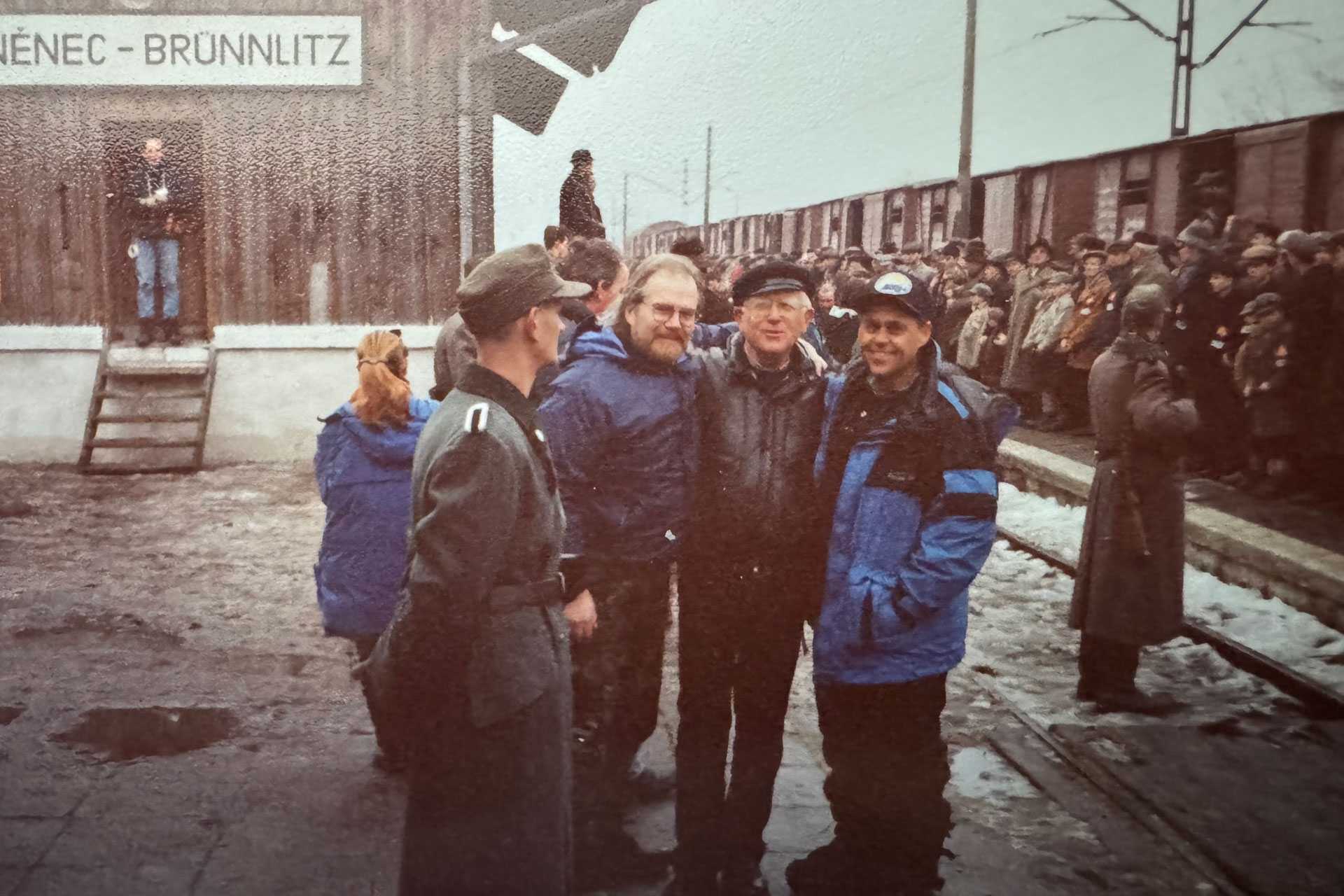
Branko Lustig would later become widely known as one of the few Holocaust survivors to win the Academy Award for Best Picture—first for Schindler’s List and later for Gladiator.