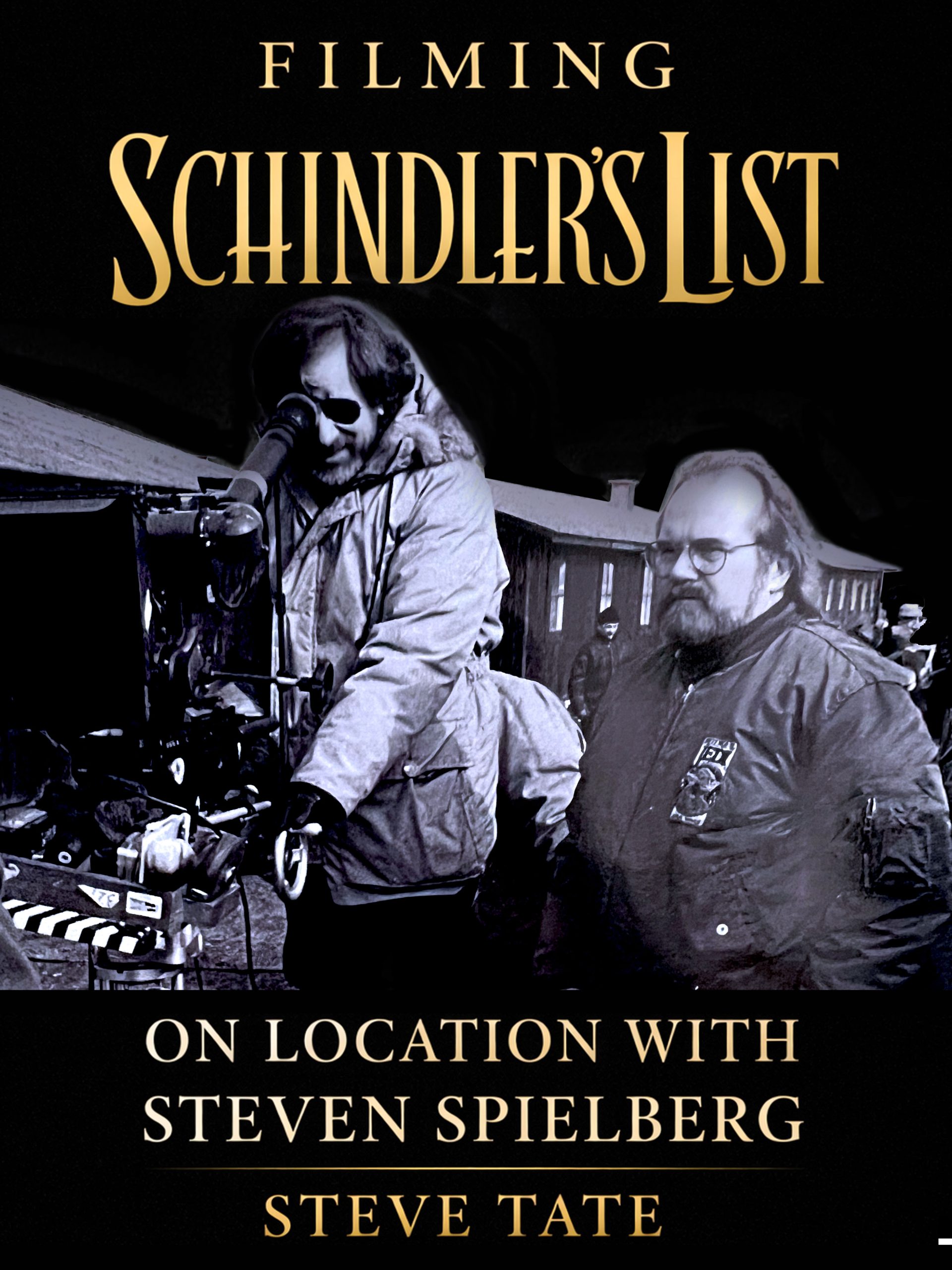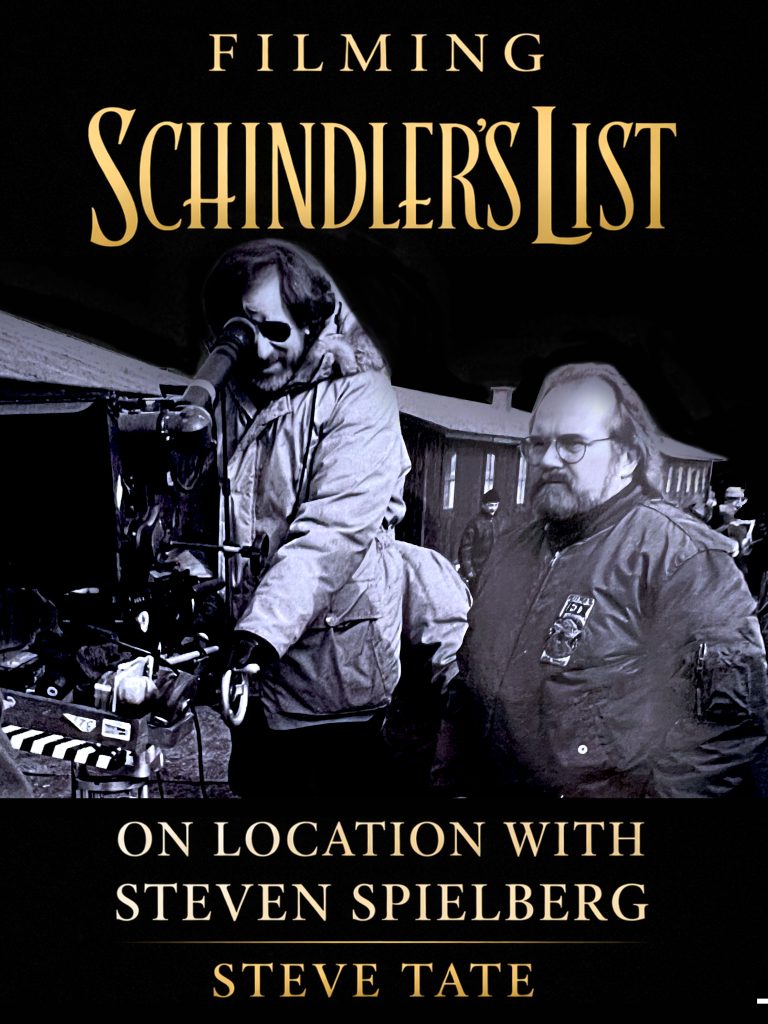
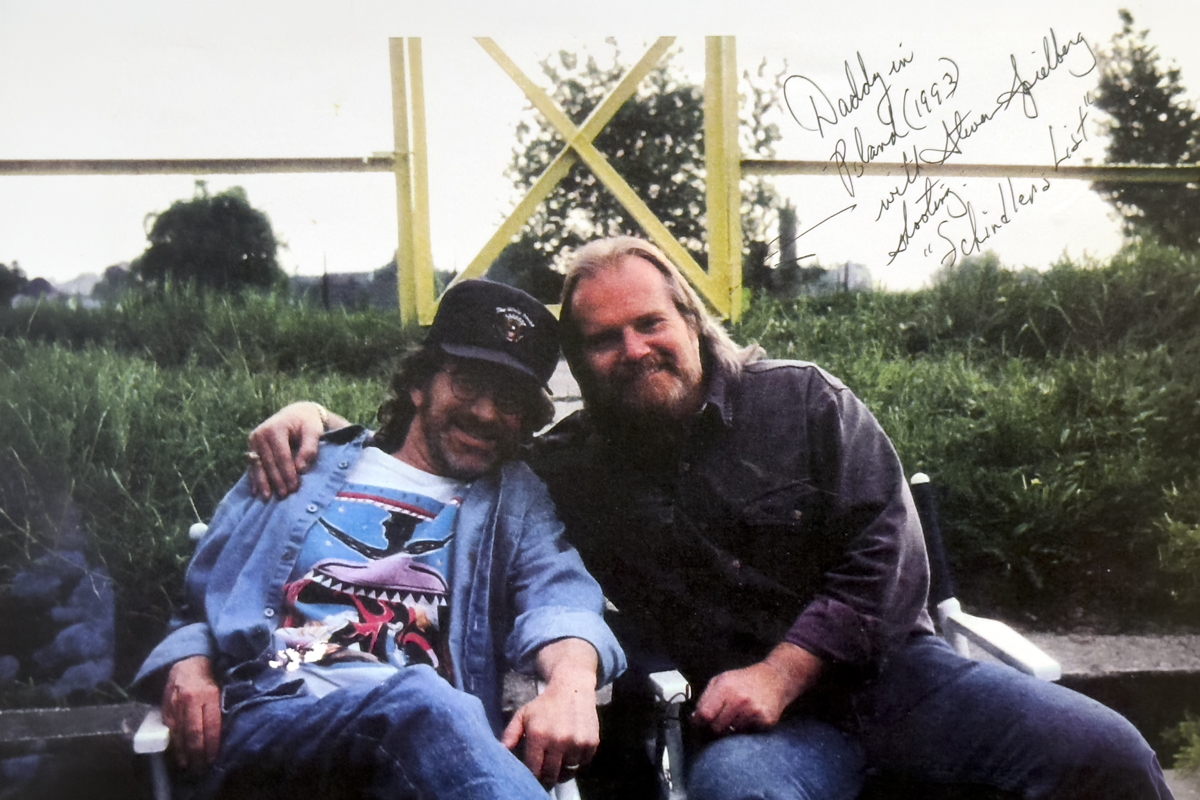
When Jason Tate came to me and said, “I want to work with you. Let’s get my father’s Schindler’s List memoir out into the world,” I understood immediately what was at stake. This wasn’t nostalgia. It was preservation.
What Steve Tate left behind is not just recollection but proximity to one of the greatest film masters of all time. He stood at the camera, feet on the ground, lens aimed into history.
As a focus-pulling camera assistant, he wasn’t observing from afar. He was embedded in the process, inches from the frame, watching moment by moment as one of the most consequential films ever made took shape.
When I first read Steve’s notes and recollections from the production, the value was obvious. These were not press stories or second-hand interviews. They were working memories, technical, emotional, human, recorded by someone inside.
The film tells the story of Oskar Schindler, the German industrialist who saved more than a thousand mostly Polish-Jewish lives during the Holocaust. Steve’s account tells the story behind the lens — how that history was approached, staged, filmed, and emotionally carried by the people tasked with bringing it to screen.
Steve did not live to complete this book, so my role became clear — protect the voice, organize the record, clarify where needed, and write the truth of Steve’s experience as he noted.
This volume exists because memory matters, process matters, and eyewitness craft matters. This book gives you the view from the lens inward.
It stands as a record of Steve Tate’s work, his presence on that set, and the determination of his son, Jason, to ensure that record was not lost but entrusting me. Thank you Jason.
Some stories are entertainment. Some are documentation. This one is testimony.
~by Ron Cobert, Co-Author
COMING SOON TO 100+ STORES!